Rabia Mustafa
In today’s deeply fragmented world, the need and urgency of peace has never been more urgent. Ongoing conflicts and rising geopolitical tensions, from the intensifying confrontation between the United States and Iran to the involvement of other states in this war, reflect a troubling shift toward confrontation rather than cooperation. In such an environment, reliance on unilateral actions and military escalation only prolongs instability, which the world does not need. It is precisely at this moment that the principles supporting multilateralism and diplomacy must be reaffirmed. Rather than resorting to force, states must return to dialogue, negotiation, and collective problem-solving as the primary means of addressing disputes. The observance of the International Day of Multilateralism and Diplomacy for Peace is therefore a timely reminder that sustainable peace can only be achieved through inclusive and cooperative international engagement.
Every year on 24 April, the international community observes the International Day of Multilateralism and Diplomacy for Peace, a United Nations initiative that underscores a simple but powerful truth: lasting peace cannot be achieved by nations acting alone. Instead, it requires cooperation, dialogue, and shared responsibility among states and institutions. This is much needed today with a full ‘Peaceful force’.
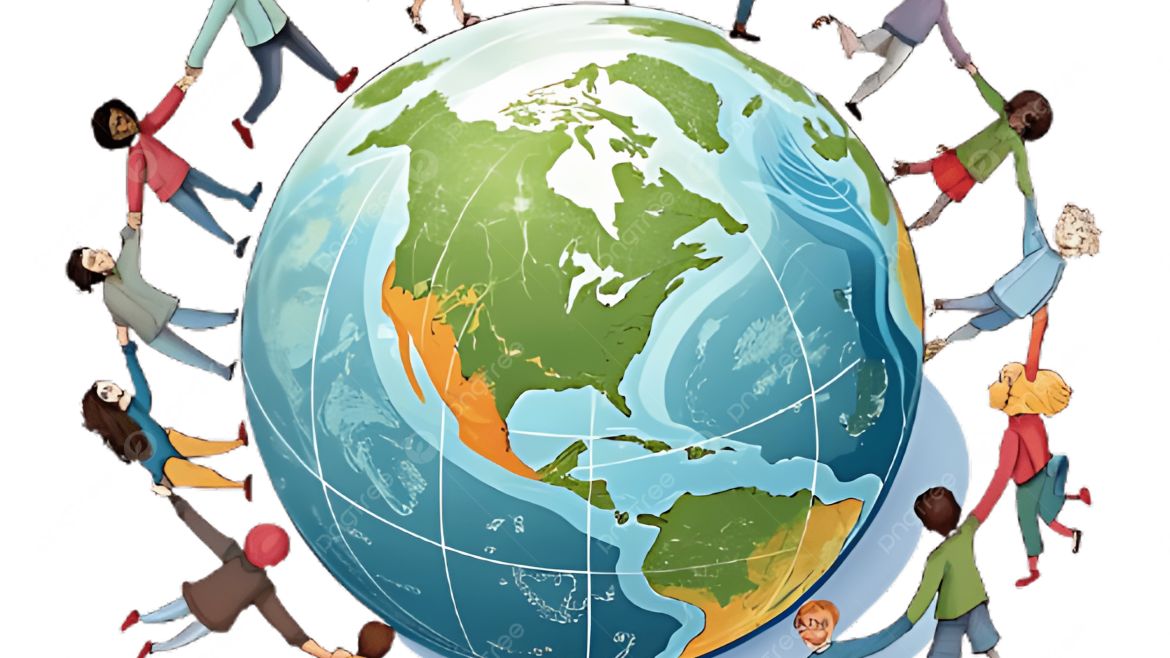
Multilateralism refers to cooperation among multiple countries working together to address shared challenges. In an interconnected world, where crises transcend borders, whether climate change, pandemics, armed conflicts, or economic instability, multilateralism provides a framework for coordinated global action.
The United Nations, established in 1945 in the aftermath of the Second World War, remains the most visible expression of this idea. Its Charter envisions the organization as a “centre for harmonizing the actions of nations” to maintain peace, promote human rights, and foster development.
This international day was established by the UN General Assembly in 2018 to reaffirm commitment to the UN Charter and to promote peaceful resolution of disputes through diplomacy rather than conflict. The central message is that conflicts should be resolved through negotiation, mediation, and dialogue, international cooperation is essential for peace and sustainable development, and collective action is more effective than unilateral approaches in addressing global challenges.
In recent years, the global order has faced increasing strain from geopolitical tensions, rising nationalism, and weakening trust among nations. Yet, paradoxically, global challenges have become more complex and interconnected. The COVID-19 pandemic, climate crises, and ongoing conflicts have demonstrated that no country can solve these problems in isolation.
Multilateralism has historically delivered tangible results from eradicating diseases like smallpox to advancing human rights norms and arms control agreements. These achievements highlight that cooperation is not merely an idealistic aspiration but a practical necessity.
Diplomacy lies at the heart of multilateralism. Preventive diplomacy, engaging before tensions escalate, remains one of the most effective yet underutilized tools for maintaining peace. The UN Charter explicitly calls on states to settle disputes through peaceful means such as negotiation, arbitration, and mediation.
In this context, Pakistan’s role assumes particular significance. Initiatives such as the Islamabad talks, aimed at bringing diverse stakeholders to the negotiating table, reflect a commitment to fostering dialogue and peaceful resolution of conflicts. These efforts provide the idea that even in a polarized global landscape, constructive engagement remains possible. By facilitating spaces for diplomacy, Pakistan contributes to reviving trust among nations and promoting a culture of negotiation over confrontation. At a time when the world appears increasingly defined by conflict, such initiatives highlight the continuing relevance and necessity of multilateralism. In this sense, diplomacy is not simply about negotiation between governments; it is about building trust, managing differences, and creating space for dialogue even in the most challenging circumstances.
Multilateralism plays a crucial role in shaping domestic legal systems, governance frameworks, and human rights protections. Countries that actively engage in international cooperation are better positioned to adopt global best practices, strengthen institutions, and address systemic challenges.
For countries like Pakistan, multilateral engagement is particularly significant in areas such as climate resilience, trade, human rights, and peacebuilding. It offers access to knowledge, resources, and collaborative platforms that are essential for sustainable development.
The International Day of Multilateralism and Diplomacy for Peace reminds us that peace is not a passive state but a continuous, deliberate process, one that depends on sustained dialogue, cooperation, and political will. In today’s conflict-ridden world, this responsibility is closely tied to the role of the United Nations, which remains the central platform for fostering multilateral engagement. In the complexity of modern conflicts, the UN must double the efforts to facilitate negotiations, deploy peacekeeping missions, and provide diplomatic channels to prevent escalation and resolve disputes. In a global landscape increasingly shaped by division and competing interests, reaffirming multilateralism through institutions like the United Nations is not merely desirable, it is indispensable for maintaining international peace and security.