Sharafat A. Chaudhr, Rabia Mustafa
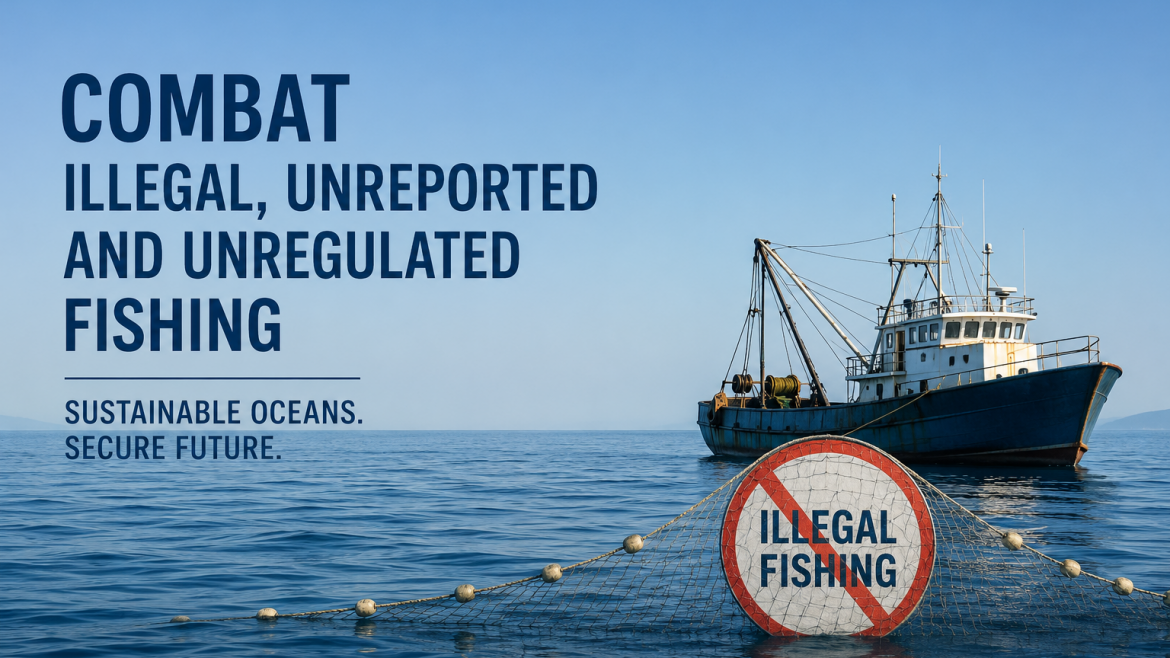
Every year on 5 June, the international community observes the International Day for the Fight Against Illegal, Unreported and Unregulated (IUU) Fishing which was established by the United Nations General Assembly in 2017. This day is a global reminder that the sustainability of the world’s fisheries, marine ecosystems, and coastal livelihoods depends upon our collective ability to combat illegal fishing practices.
Fishing is more than an economic activity. For billions of people around the world, fish are a vital source of nutrition, employment, trade, and cultural identity. Yet these benefits are increasingly threatened by illegal, unreported and unregulated fishing, commonly known as IUU fishing. According to the UN Food and Agriculture Organization’s (FAO) recent report, “Review of the State of World Marine Fishery Resources – 2025,” over a third of fish stocks are being overexploited. IUU fishing catches millions of tonnes of fish every year. It is estimated that one out of every five fish caught globally may originate from illegal or unregulated activities.
The concept of IUU fishing encompasses three interconnected forms of misconduct. Illegal fishing occurs when vessels operate in violation of national laws or international conservation measures. Unreported fishing refers to catches that are not reported or are misreported to relevant authorities. Unregulated fishing occurs where vessels operate outside established management frameworks.
The consequences of IUU fishing extend far beyond the fisheries sector. Unsustainable fishing practices contribute to the depletion of fish stocks, damage fragile marine habitats, threaten endangered species, and weaken the resilience of ocean ecosystems. Coastal communities that depend upon fisheries for their livelihoods are often the first victims. As fish stocks decline, incomes shrink, food security deteriorates, and social vulnerabilities increase. In developing countries, where millions depend directly on fisheries for survival, the impact can be particularly severe.
Recognizing the global nature of the problem, the FAO adopted the International Plan of Action to Prevent, Deter and Eliminate Illegal, Unreported and Unregulated Fishing (IPOA-IUU) in 2001. The IPOA-IUU provides governments with a comprehensive framework for combating illegal fishing through effective legislation, vessel registration systems, licensing mechanisms, monitoring and surveillance programmes, port controls, information sharing, and international cooperation. Although voluntary in nature, the IPOA-IUU has become the cornerstone of global efforts to address illegal fishing and has inspired national and regional plans of action across the world. Pakistan is a signatory to this action plan. To address the specific needs of developing countries, collaboration among states, FAO, and international financial institutions is recommended in this document. Support should encompass training, capacity building, and financial assistance, aiding them in fulfilling their commitments under the IPOA against IUU fishing. Cooperation is also encouraged for the review and enhancement of national legislation, improvement of data collection, strengthening of regional institutions, and the development of integrated monitoring, control, and surveillance (MCS) systems, including satellite monitoring.
One of the most significant developments in the fight against IUU fishing has been the adoption of the Agreement on Port State Measures to Prevent, Deter and Eliminate Illegal, Unreported and Unregulated Fishing in 2009. This agreement remains the first binding international treaty specifically targeting IUU fishing and it stipulates minimum port State measures to prevent, deter and eliminate illegal, unreported and unregulated fishing. Sustainable Development Goal 14 is also linked with the fight against illegal fishing to conserve and sustainably use oceans, seas and marine resources, including by ending overfishing and eliminating IUU fishing.
The fight against IUU fishing strengthens through technological innovation. Modern fisheries governance now relies on tools such as Vessel Monitoring Systems (VMS), satellite surveillance, electronic logbooks, digital catch documentation, traceability mechanisms, and centralized fisheries information systems. By enhancing transparency and accountability throughout the fisheries supply chain, technology has become one of the most effective tools in detecting and deterring IUU fishing.
However, technology and enforcement are only part of the solution. The ultimate objective of combating IUU fishing is the protection and recovery of marine ecosystems. Experience from around the world demonstrates that oceans possess a remarkable capacity to recover when provided with effective protection and sustainable management. The experience of Palau illustrates this reality, where the establishment of protected marine areas and restrictions on fishing activities allowed reef ecosystems to regenerate, resulting in healthier fish populations and increased catches in surrounding fishing grounds. Expanding such conservation measures, can contribute significantly to restoring depleted fish stocks, preserving marine biodiversity, and securing the long-term sustainability of the world’s oceans.
For Pakistan, a maritime nation with over 1,000 kilometres of coastline, a vast Exclusive Economic Zone in the Arabian Sea, and fisheries that contribute significantly to employment, exports, food security, and coastal livelihoods, combating IUU fishing is both an environmental necessity and an economic imperative. Illegal fishing not only depletes valuable fish stocks and damages marine ecosystems but also deprives the national economy of revenue, and undermines sustainable fisheries governance. Recognizing these challenges, Pakistan has developed a legal and institutional framework comprising fisheries, maritime, port, security, shipping, quarantine, and environmental laws aimed at regulating fishing activities, strengthening monitoring and enforcement mechanisms, and promoting the sustainable utilization of marine resources.
Against this backdrop, the Balochistan Fisheries and Aquaculture Bill, 2026, drafted by Sharafat A. Chaudhry, engaged through FAO, represents a significant step forward in modernizing fisheries governance in Balochistan. The Bill has been passed by the Cabinet, Government of Balochistan. It is the most modern legislation in the country, which introduces a comprehensive framework aimed at sustainable fisheries management, digital governance, monitoring and surveillance, and the prevention of IUU fishing.
One of the most notable features of the Bill is the express recognition of IUU fishing as a distinct challenge. The legislation adopts the internationally accepted FAO definition of Illegal, Unreported and Unregulated Fishing, thereby aligning provincial fisheries governance with global standards and best practices. It embeds international cooperation into the legal framework by committing the Government to cooperate with other nations and international organizations in combating IUU fishing.
A central pillar of the legislation is the establishment of a comprehensive MCS system. The Bill requires the Fisheries and Coastal Development Department to establish mechanisms for monitoring fishing activities from the commencement of fishing operations through landing and final destination of fish products. Among the most significant innovations is the introduction of a VMS. The Department is mandated to implement VMS in accordance with provincial and national standards.
The legislation also introduces electronic logbooks. Fishing vessel operators are required to maintain records of catches, fishing effort, species composition, fishing gear used, duration of fishing operations, discarded catches, and landing information. Electronic recording of fisheries data significantly improves transparency and directly addresses the ‘unreported’ component of IUU fishing.
To complement these measures, the Bill establishes a centralized digital fisheries database. This database is intended to contain information relating to fish stocks, vessel registrations, electronic logbooks, catch records, landing data, processing activities, traceability systems, violations, prosecutions, and convictions.
Another major reform introduced by the Bill is the mandatory registration of fishing vessels, fishing crews, fishers, aquaculture establishments, processing facilities, landing sites, harbours, and fisheries-related infrastructure. The Department is required to conduct stock assessments, determine Maximum Sustainable Yield (MSY), establish catch limits, and allocate quotas based on scientific evidence. These provisions aim to prevent overfishing and contribute to the long-term sustainability of fisheries resources.
Viewed collectively, these provisions demonstrate a clear shift from traditional fisheries regulation toward a modern governance framework based on monitoring, surveillance, digital traceability, scientific management, and international cooperation. The Bill incorporates many of the key measures promoted by the FAO’s International Plan of Action to Prevent, Deter and Eliminate Illegal, Unreported and Unregulated Fishing and reflects emerging international best practices in fisheries governance. This Bill is an example of how provincial legislation can contribute meaningfully to global fisheries governance.
Yet, the true value of any legislation lies not merely in the sophistication of its provisions but in its implementation. The Bill is only one ideal example that demonstrates how modern fisheries legislation can integrate technology, science, international standards, and governance mechanisms into a single legal framework. However, its effectiveness depends upon the commitment of governments, enforcement agencies, and fishing communities to utilize them effectively. As in Palau, sustainable fisheries management is ultimately achieved through a combination of sound laws, effective institutions, political will, stakeholder participation, and consistent enforcement. If supported by adequate resources, institutional capacity, scientific research, and public commitment, its implementation has the potential not only to protect marine ecosystems and fish stocks but also to strengthen food security, coastal livelihoods, and the blue economy for generations to come.