

Aftab Anwar Baloch
In Pakistan, holography and optical security technologies are evolving beyond their traditional role in document security and anti-counterfeiting. While secure identity programmes remain a key application, the growing use of these technologies in brand protection, digital communication and immersive experiences highlights their expanding influence across the country’s public and commercial sectors.
One of the most significant applications of holography in Pakistan is its e-passport programme. Introduced in 2022, the e-passport incorporates around 29 advanced security features, including holographic elements, to protect biometric data and personal information. Built on a polycarbonate data page and compliant with International Civil Aviation Organisation (ICAO) standards, the document significantly enhances resistance to forgery and tampering.
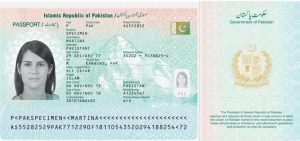
Pakistan’s progress in secure identity infrastructure has also attracted international attention. In July 2025, a delegation from China’s Ministry of Public Security visited the Passport Headquarters in Islamabad to explore opportunities for future cooperation in document security and technology. The visit highlighted the growing recognition of Pakistan’s capabilities in secure document issuance and authentication.
Beyond government: Brand Protection
While secure identity documents remain the most visible application of optical security in Pakistan, commercial adoption is also expanding across consumer products and brand protection programmes.
The ecosystem extends well beyond government documents. SICPA Pakistan recently marked 30 years of operations in Karachi. Originally established in 1995 to provide high-security inks for Pakistan’s banknotes in partnership with the State Bank of Pakistan and the Pakistan Security Printing Corporation, the company has broadened its activities considerably. Since entering the brand protection sector in 2007, SICPA Pakistan has helped protect more than 60 commercial brands using advanced authentication solutions, including its colour-shifting QUAZAR® technology.
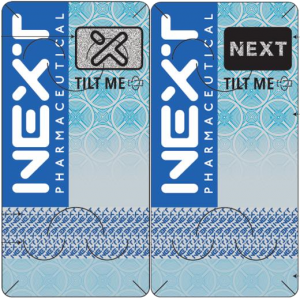
Pharma Security Label with QUAZAR®, Source: Next Pharma
Companies are also increasingly adopting security labels and seals to strengthen consumer confidence and combat counterfeiting. One example is Shell’s authentication solution for lubricant products in Pakistan. Developed by Karachi-based Ultracoat, the label combines a fingerprint ID, QR code, hologram and scratch code to enable product verification.

Source: Shell Pakistan
Holography beyond security
Optical technologies are also beginning to transform public experiences. Last year, the Lahore Zoo launched ‘HoloVerse’, featuring Virtual Reality (VR), Mixed Reality (MR) and a dedicated 3D hologram cinema, offering visitors immersive educational and entertainment experiences.
Holographic entertainment is also gaining attention. The planned holographic world tour of the late Indian-based (Punjabi) singer Sidhu Moose Wala is expected to use advanced 3D holographic technology to recreate the artist’s stage presence, demonstrating how holography is expanding into live entertainment and audience engagement.
Pakistan has also begun experimenting with holographic communication. At the Higher Education Commission’s ‘Pakistan Digital Leap’ event in 2025, HEC Chairman Dr Mukhtar Ahmad appeared as a holographic avatar, one of the country’s most prominent demonstrations of holographic presentation technology.

